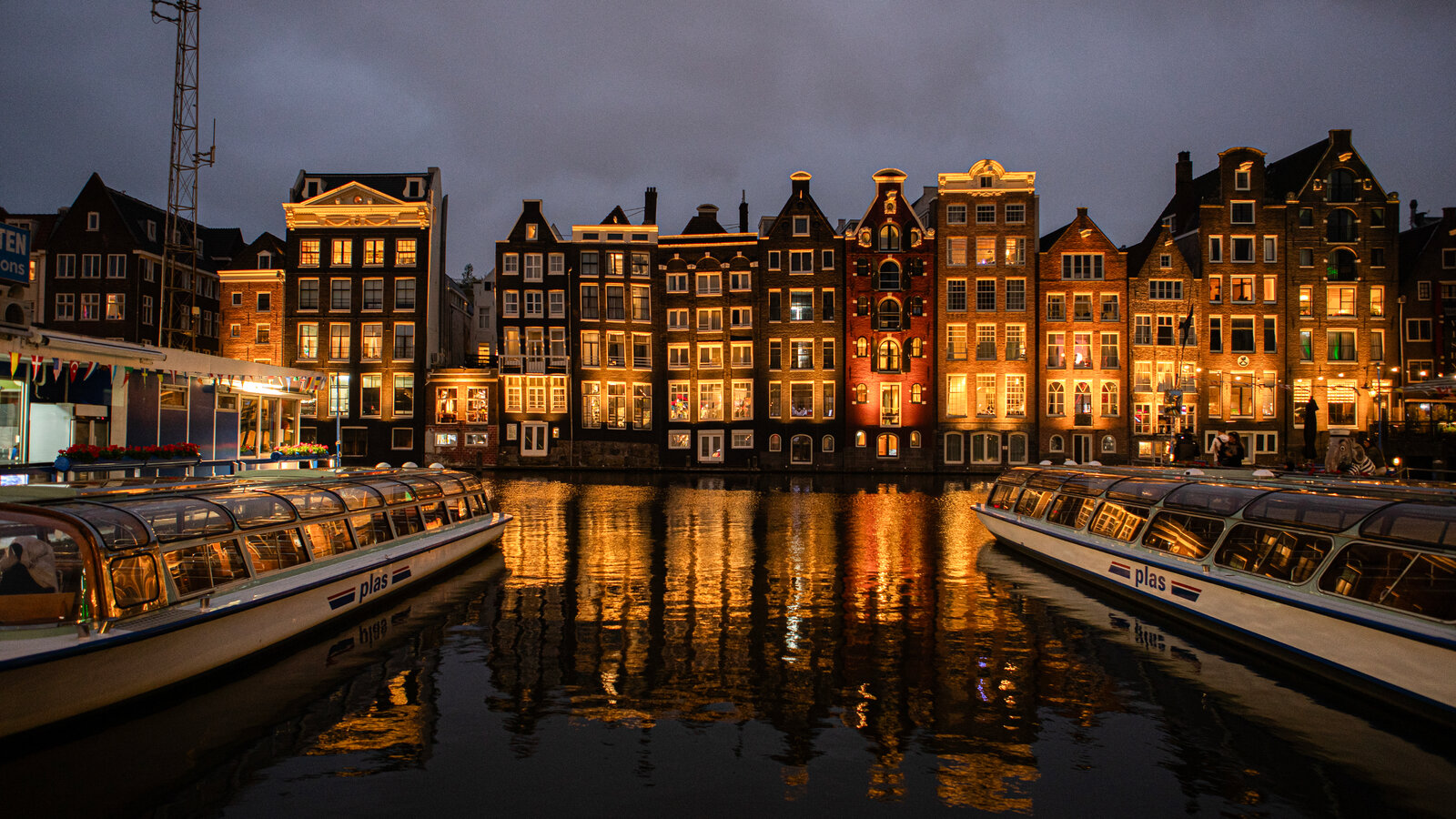
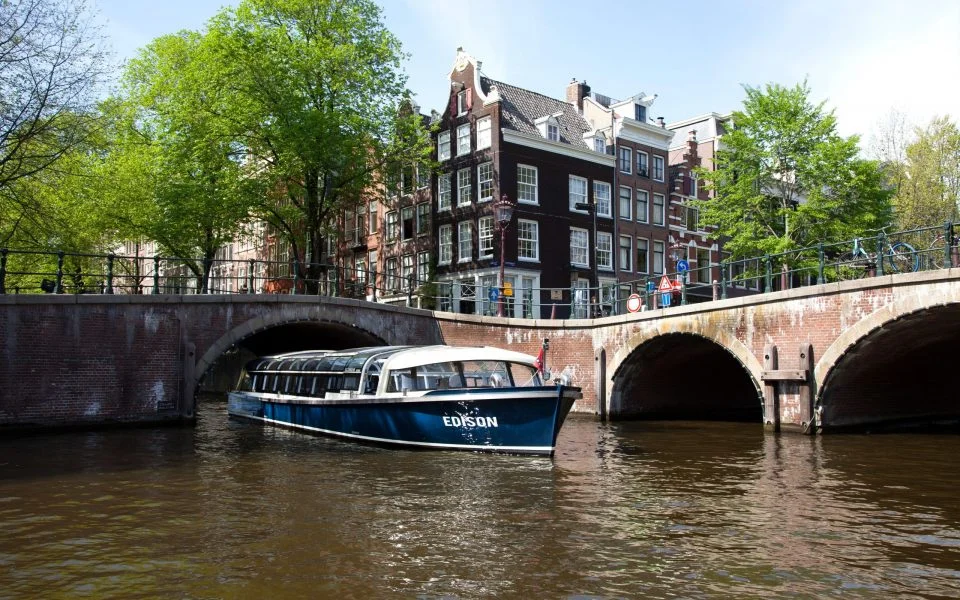
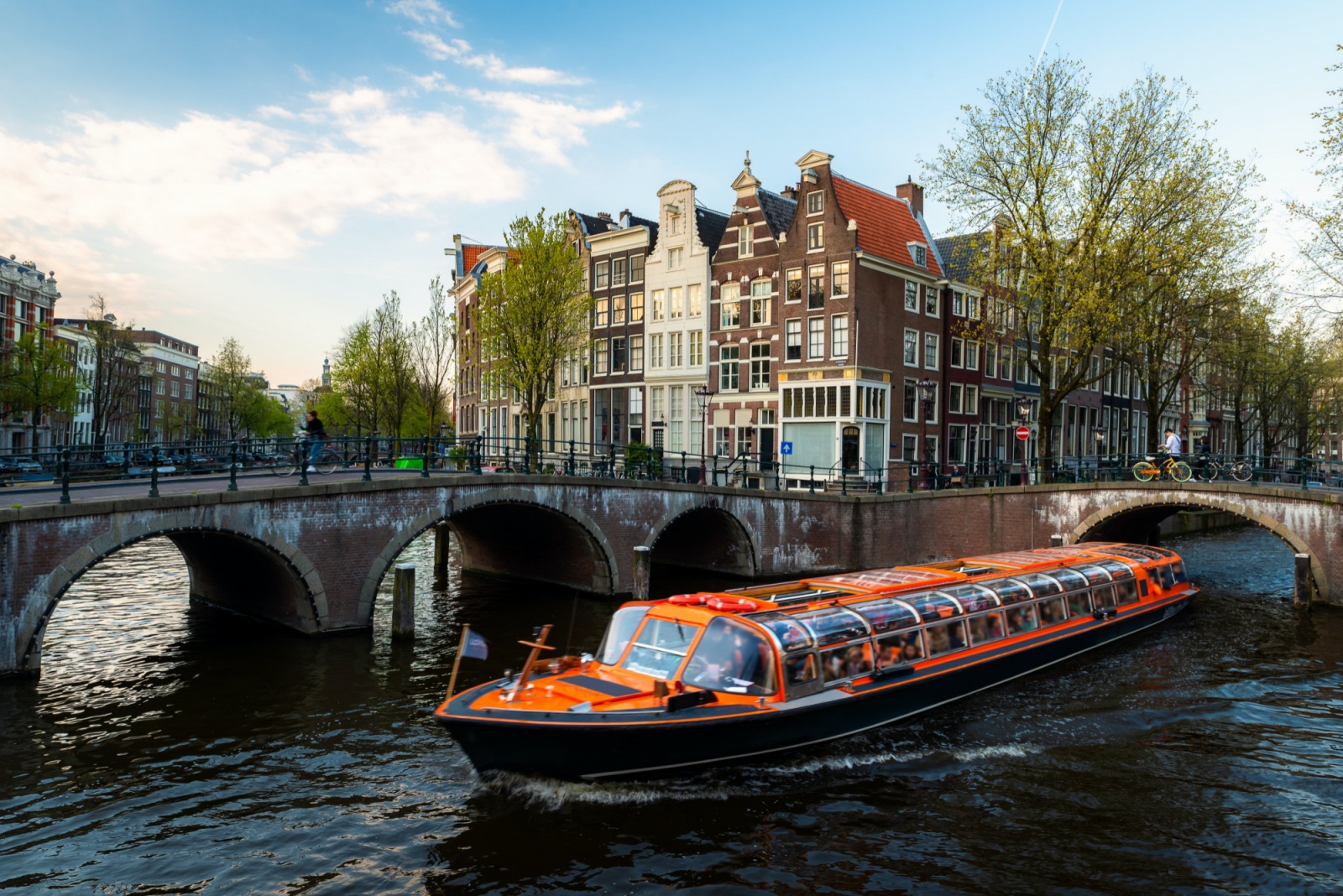
Amsterdam has its fair share of famous features (aside from Amsterdam Yacht Services, of course), from the clattering throng of myriad bicycles to the enchanting fan of canals that radiate through the city centre. Those canals also play host to more than 100 cruise and tripper vessels that offer tourists a unique view of the city by day or a spectacular floating dinner or drinks by night. But there’s a challenge facing the operators of those vessels – as the city looks to improve its eco footprint and reduce pollution, so it has been mandated that all the commercial canal cruise boats should be converted to be zero-emission. Although the deadline has been pushed back several times in the past, the time has come for the changes to be made – and Amsterdam Yacht Services is right there assisting with the problem by developing an ingenious solution for its customers.
“Our workshop at Amsterdam Yacht Services does a lot of work for the canal boat operators such as Lovers and Stromma,” enthuses Robert Binnekade, managing director at Amsterdam Yacht Services. “With the zero-emission deadline upon us, we have been working with Lovers – who also operate in other tour sectors and other cities such as Copenhagen – to assist them with the move. It’s been a really nice cooperation with the customer – they employed a designer to create a solution together with our inhouse team, and we went through multiple iterations to get a good design.”
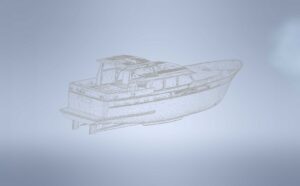
The solution involves pre-building new hull sections complete with new propulsion package that, when each of the canal boats comes in for scheduled maintenance, can simply serve as a plug-and-play replacement for the existing hull sections which carry conventional diesel propulsion packages. “The new subsections are constructed with all elements already fitted, including an electric motor, battery pack, shaft and shaft seals, propeller, rudder etc,” says Binnekade. “All that’s needed then is to cut the equivalent existing section out of the boat and fit and weld the new section in.”
It speaks to the skills of the AYS team that they have been involved in the project from the start, from helping develop the design concept and engineering to sourcing the cutting packages and fabricating the new sections ready to be fitted – as well, of course, as undertaking the cut-and-weld replacement works and subsequent hull finishing.
“It’s another example of how we approach interesting or challenging refit or retrofit projects, by looking at the project from the inside out from a technical point of view rather than just adding new bits of equipment to the existing ship and then trying to tie everything together,” Binnekade asserts. “We started this project one and a half years ago, and now we’re at the point where the new sections are completed and we’re just waiting for each boat to come out of the water. These are busy vessels for a commercial.
VIDEO: Classic Yacht Renovation – Preserving a way of life
A classic yacht is a legacy, and we treat it that way. We restore your yacht to its original glory, without losing its soul. We blend old craftsmanship with modern technology. Amsterdam Yacht Builders brings your classic back to life. Read more about our Classic Yacht Renovation services here.
Race relations
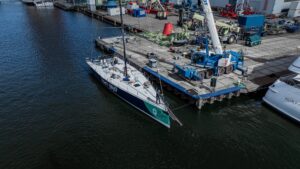
Amsterdam Yacht Service sees all sorts of projects arrive for all sorts of works, but sometimes there can be a bit of a change of pace. Enterthe VO65 Team JAJO, a true round-the-world racer with the credentials to back her up. First launched for the 2014-2015 edition of The Ocean Race, where she placed second […]
Monaco Yacht Show & METS Amsterdam
Amsterdam Yacht Service is pleased to share its upcoming show calendar for this season. Robert Binnekade will be attending the Monaco Yacht Show, and would be delighted to meet with clients to discuss all their service, maintenance and repair requirements. Whether you have a specific project in mind or simply wish to explore how our […]
Atlantic returns
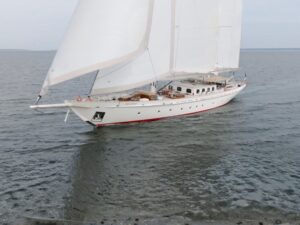
Getting repeat clients is always a thrill, not just because it’s testament to the capabilities Amsterdam Yacht Service offers, but also because it’s like greeting old friends. We were especially thrilled in late Spring this year to welcome back the mighty 64.5-metre schooner Atlantic, who trusted the AYS team to help with some involved work […]
BLOG 6. “Hull 405: Classic Lines, Modern Heart”
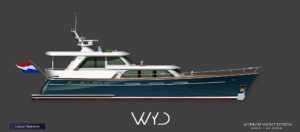
It’s been a while since we’ve blogged about our 17-metre Pieter Beeldsnijder-designed motor yacht that we acquired part-complete in 2023. That’s partly because we’ve been so busy with a vast array of other projects that have been coming through the yard – from stunning sailing schooners like the 64.5-metre Atlantic to sections of a bridge […]
From Mandarine to Melody
It’s no secret that Amsterdam Yacht Service caters to an incredibly diverse range of clients, from motor yachts to commercial vessels, tourist boats, and even – on occasion – civil engineering companies floating sections of bridges into place. Few could argue, however, that the stars of the yard are the stunning sailing yachts that make […]
VIP treatment
It’s not only yachts, tourist boats and commercial vessels that get a revamp at Amsterdam Yacht Services – the shipyard itself is constantly upgrading its facilities. Most recently, AYS has taken a proactive approach to expand the drainage and water treatment system that serves the one and a half hectares of hardstanding, where vessels will frequently undertake out of water repairs and maintenance.
Five stars for Three Point 4
While a lot of the more intensive work we undertake at Amsterdam Yacht Service revolves around refit, repair and maintenance of steel and aluminium vessels and their systems, our team has the flexibility to tackle pretty much any material. That was ably demonstrated this winter when we took in a 29-metre Maiora called Three Point 4 for various works.
Holy Trinity
While the Amsterdam Yacht Service team brings a wealth of experience and expertise across a broad range of disciplines, they will still freely admit that every day is a learning day. In the case of the 16m Amel Super Maramu sailing yacht Trinity, the learning came from the yacht’s owner who, in the course of outlining how she wanted the yacht’s interior refreshed, showed the potential of AI as a quick visualisation tool.
Home away from home
One of the things that always strikes us is the vast array of projects that float through the Amsterdam Yacht Service facilities, from classic sailing superyachts to commercial vessels, tourist boats, and even bridge components.
Merry Christmas and a Happy 2026
2025 has been a dynamic and rewarding year for Amsterdam Yacht Service. Our team has continued to expand and refine its expertise, successfully delivering a diverse range of maintenance, refit, and custom projects for clients across the globe.
Multiplying returns
It’s perhaps the greatest compliment we can receive when customers come back for a return visit to our state-of-the-art facilities in Amsterdam. Sometimes it’s for larger works that make use not just of our hardstanding areas or large sheds but also our expert inhouse team of engineers, carpenters and fitters – and sometimes it’s for general maintenance jobs.
Join AYS at Metstrade 2025!
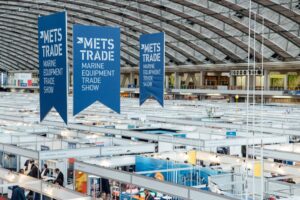
The Amsterdam Yacht Service team will be present at the Amsterdam RAI exhibition centre for all three days of Metstrade, 18–20 November 2025. It’s the ideal moment to meet us in person and discover more about our state-of-the-art facilities and onsite expertise: everything you need to ensure your next build, maintenance, or refit projectruns seamlessly from start to finish.
Meet us at the MYS
Members of the Amsterdam Yacht Builders team will spend two days in and around Port Hercules this week as they visit the Monaco Yacht Show. If you would like to meet up and discuss any potential project we would be delighted to do so on Thursday 25 and Friday 26 of September. It’s sure to […]
Happy days
The long summer days are finally here, and it’s time for most yachts to switch from maintenance mode to magical-days-on-the-water mode. For the team at Amsterdam Yacht Service, of course, the work never stops – even during summer, we have vessels coming through for haul-outs, services and all manner of works.
Atlantic crossing
Few things can match the glamour, beauty and sheer elegance of the 64.5-metre sailing yacht Atlantic – a 2010-launched recreation of the original schooner Atlantic which first touched the water in 1903.
Simplifying survey
While the Amsterdam Yacht Service team can turn its hand to pretty much anything, and while the shipyard itself can handle pretty much any type of vessel, not every project involves complex hull repairs or hotwork.
A bridge too far?
We pride ourselves on the variety of vessels and projects we work on here at Amsterdam Yacht Service – from yachts to tourist boats to commercial vessels and workboats, they all come to take advantage of our in-water berthing, haul-out and hardstanding, refit sheds and inhouse expertise.
Near and Far Niente
It’s perhaps fitting that a 32.7-metre modern classic motor yacht styled after the Dutch herring luggers of the early 1900s should land in a Dutch refit and maintenance specialist shipyard, and that’s exactly what happened in the Autumn of 2024.
The gold standard
It’s one thing finishing a summer season then heading to a shipyard with a list of works to do over the winter and plenty of time to complete that list – but quite another when you arrive in the Spring and need to get those works completed in time for the summer charter season.
BLOG 5. ‘The making of a modern classic’ – An inside job
As we make steady progress with the construction of Hull 405 – the Pieter Beeldsnijder-designed 17-metre steel yacht that had laid part complete for two decades, before we acquired her in 2023 in order to finish her build – we are starting to think about some of the fun stuff.
A true Grand Dame: AYS-refitted superyacht wins major St Barths Bucket prize
Excellent news reaches us from the Caribbean of a stunning performance by one of our recent projects. A key remit from the vessel’s highly experienced owner for the refit of his 56-metre Perini Navi Panthalassa was to bring her technically up to speed and highly competitive in sailing races.
BLOG 4. ‘The making of a modern classic’ – Redesigning the aft end
If there’s one thing we’ve learnt here at Amsterdam Yacht Service after decades of experience working on commercial and, in recent years, yacht and superyacht refit and rebuild projects, it’s that you don’t always need to go for the most high-tech solution in every aspect of the vessel.
Solving the chromium-6 conundrum
When a shipyard’s refit project needed to be lifted out to undertake remedial works ashore, Amsterdam Yacht Service proved to be the ideal choice – and as it turned out, not just for its yard facilities and location. The project in question involved a vessel originally constructed in the middle of the last century, but […]
BLOG 3. ‘The making of a modern classic’ – Creating a 3D hull scan
With the classic Pieter Beeldsnijder 17-metre steel yacht hull – known as Hull 405 – safely ensconced in our advanced facilities, the team has been able to begin the detailed engineering work needed to bring the hull to completion.